China Clears First Brain-Computer Implant for Commercial Use
Days after Chinese regulators approved what officials describe as the world’s first invasive brain-computer interface device cleared for commercial use in patients, Shanghai announced three new research centers aimed at accelerating the technology’s development.
The device, known as the NEO system, was developed by Shanghai-based company Neuracle Medical Technology. On March 13, China’s National Medical Products Administration granted it a Class III medical device certificate — the country’s highest regulatory classification — allowing it to enter clinical use.
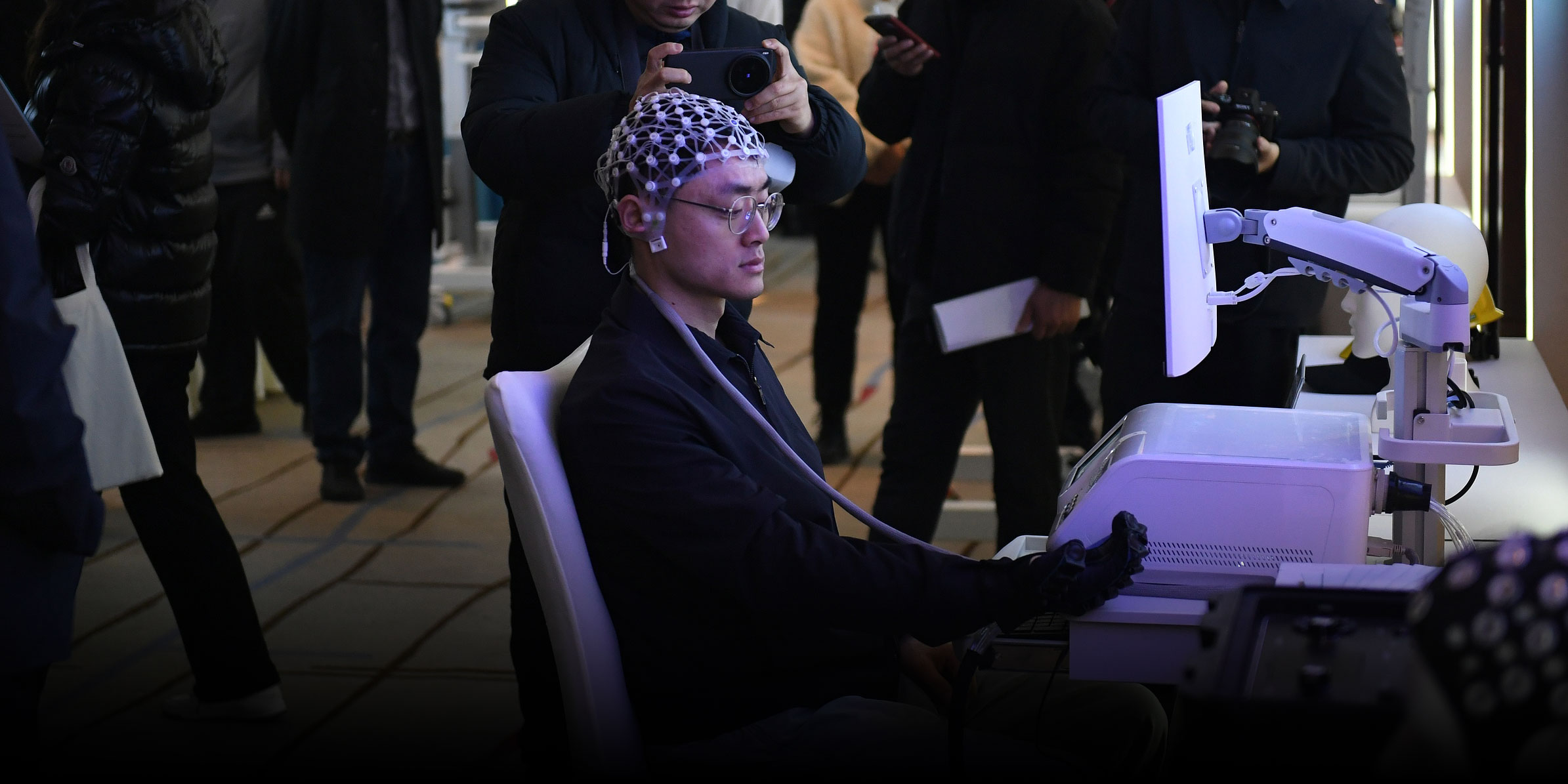
The system is designed to help patients with quadriplegia caused by cervical spinal cord injuries regain limited hand function. It combines an implanted brain-computer interface (BCI), an implantable EEG electrode kit, and a pneumatic robotic glove that assists with grasping movements.
In clinical trials involving 36 participants, all patients showed improvements in hand grasping ability. Researchers also observed signs of neural remodeling in some cases, suggesting the technology may help stimulate the recovery of additional neurological function.
The system works by reading neural signals associated with movement. When a patient thinks about moving their hand, sensors implanted near the brain detect those signals and transmit them wirelessly to the robotic glove, which then moves the patient’s fingers to grasp or release objects.
The device is intended for patients ages 18 to 60 with quadriplegia caused by cervical spinal cord injuries between the C2 and C6 vertebrae. Eligible patients must be unable to grasp objects with their hands but still retain some function in their upper arms.
Zeng Yuhang, an engineer at Neuracle, told Shanghai-based outlet The Paper that the implanted sensors are about the size of a coin. The device uses an epidural implantation approach that sits above the brain’s protective membrane, reducing potential damage to brain tissue while maintaining signal quality.
The system is also battery-free. A magnetic coil powers the implant wirelessly, eliminating the need for patients to remove the device for charging. After implantation, patients may be able to operate the system independently at home about one month after surgery.
One participant in the trial, identified only by the surname Dong, joined the study in October 2024. After more than a year of rehabilitation training, he was able to write simple phrases such as “thank you” and his own name without assistance from the brain-computer interface.
With the help of the device, Dong was also able to perform tasks he had been unable to do for four years, including lifting a cup, drinking water, and putting the cup back down.
Two days after the NEO system received clearance, Shanghai announced three BCI research centers at the Shanghai International Forum on Lansheng Brain Science and BCI. Two of them led by Shanghai Lansheng Brain Medical Research Co., Ltd., will focus on innovative research and AI integration. And the third led by Tongji University Affiliated Tianyou Hospital will work on targeted neuromodulation therapy. The forum brought together more than 300 researchers, clinicians and industry experts to discuss advances in BCI technology and the treatment of brain diseases.
Mao Ying, president of Huashan Hospital — which has conducted the largest number of clinical trial cases — said future versions of the technology could eventually help paralyzed patients walk again by targeting recovery in the lower limbs.
However, he cautioned that BCI technology remains in its early stages. “We hope the public understands that current BCI technology cannot instantly resolve symptoms,” Mao said. “These technologies cannot be used immediately after implantation and require extensive training and rehabilitation.”
(Header image: VCG)